Case study
PhotoBase spent $1,000 on Pond and got insight an agency would have charged $5,000 for
PhotoBase paid $1,000 for 50 proof-backed user testing sessions on Pond, with screen recordings and written feedback, against agency quotes of $5,000.
Pond AI· 10 July 2026· 6 min read
 Pond AI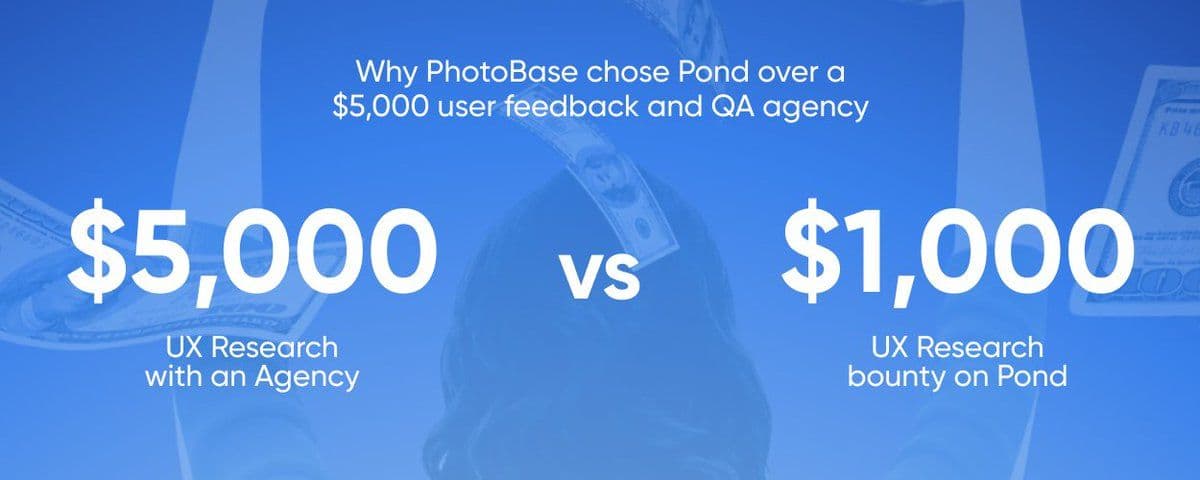
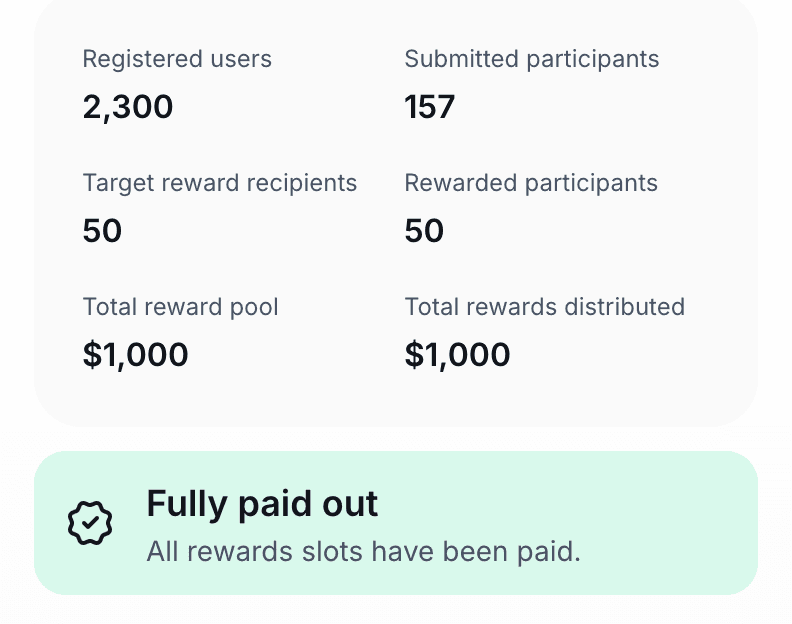
2,300 people in various background from engineers, designers and consumers showed up, 157 submitted real screen recordings and 50 actually got paid.
This is most cost-efficient to do user testing for your product in 2026.
You've priced user research before: $75 a session on UserTesting, $200 if you want someone recruited properly, 50 sessions at that rate is $5,000 to $15,000, $300 through an agency, plus a 4-week wait before you see anything.
Most early founders can't spend that, so they skip research entirely and ship on guesses.
PhotoBase didn't skip the user-testing. They only paid $1,000 and got 50 real sessions, screen recordings included.
Here's the exact breakdown 👇
The actual bounty setup
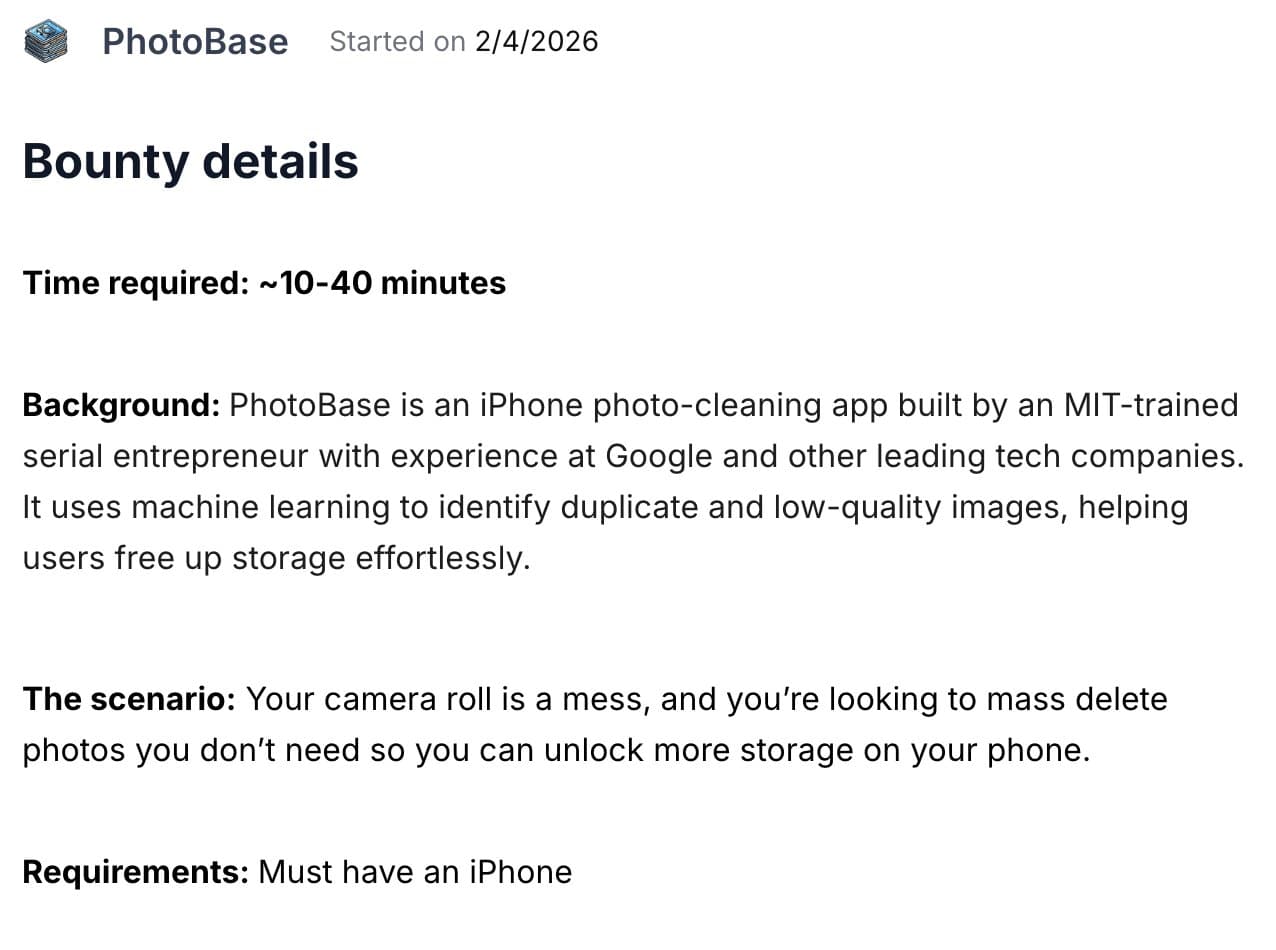
PhotoBase is an iPhone app that uses machine learning to find low-quality, blurry, and duplicate photos clogging up your camera roll.
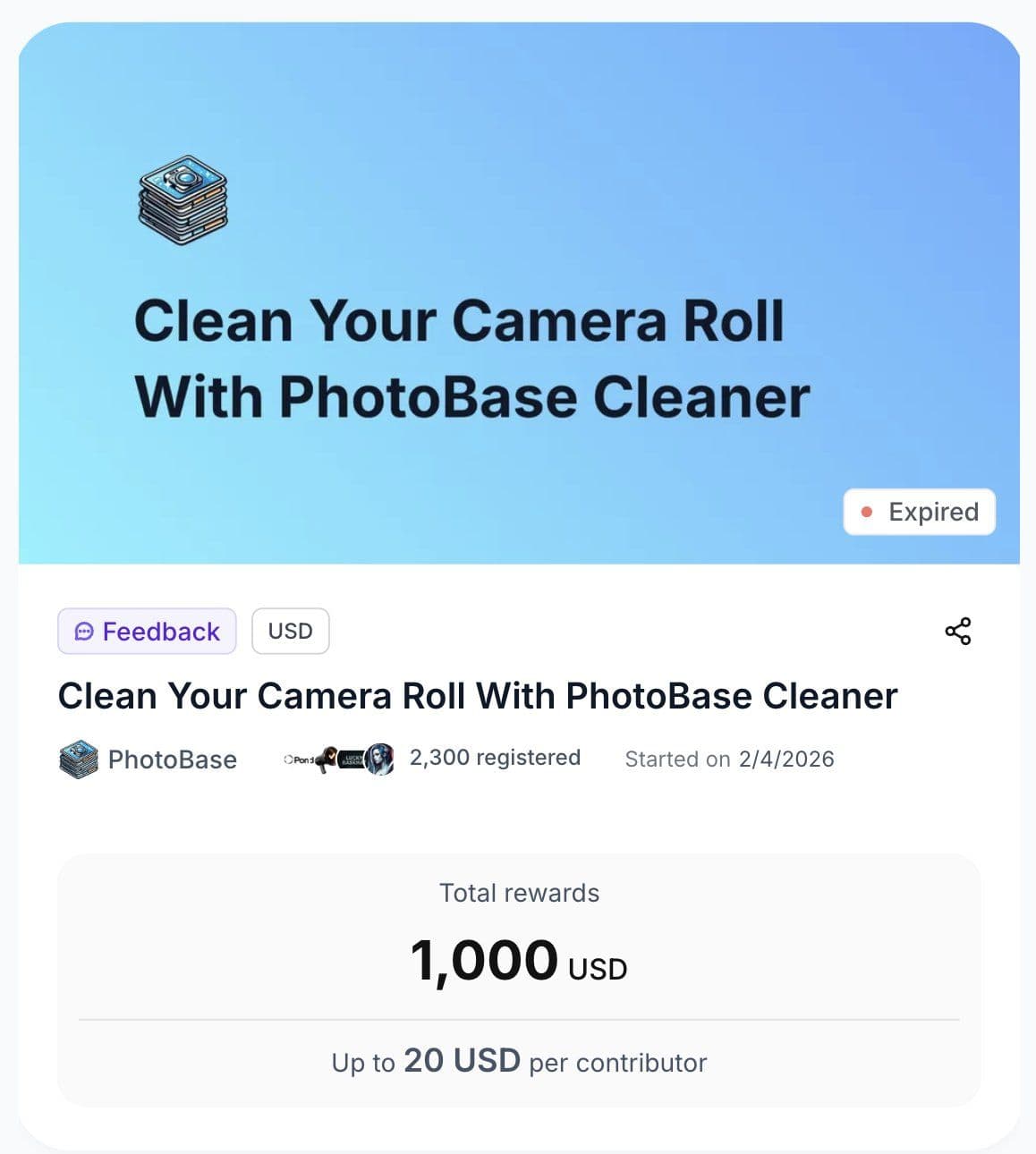
PhotoBase App bounty on Pond
The bounty: $20 per contributor, 50 slots, 10-40 minutes of work and download the app.
- Use it on your own camera roll
- Record a 60 secs screen recording as proof
- Submit a stats screenshot
- Answer a written questionnaire
Eliminating any panel or script, just an actual, unfiltered camera roll.
The results
2,300 people registered, 157 submitted proof of real usage.
One user had 306 photos and videos at 13.5 GB, videos alone ate 94.4% of that storage.
PhotoBase flagged 118 low-quality shots sitting in a library they thought was clean.
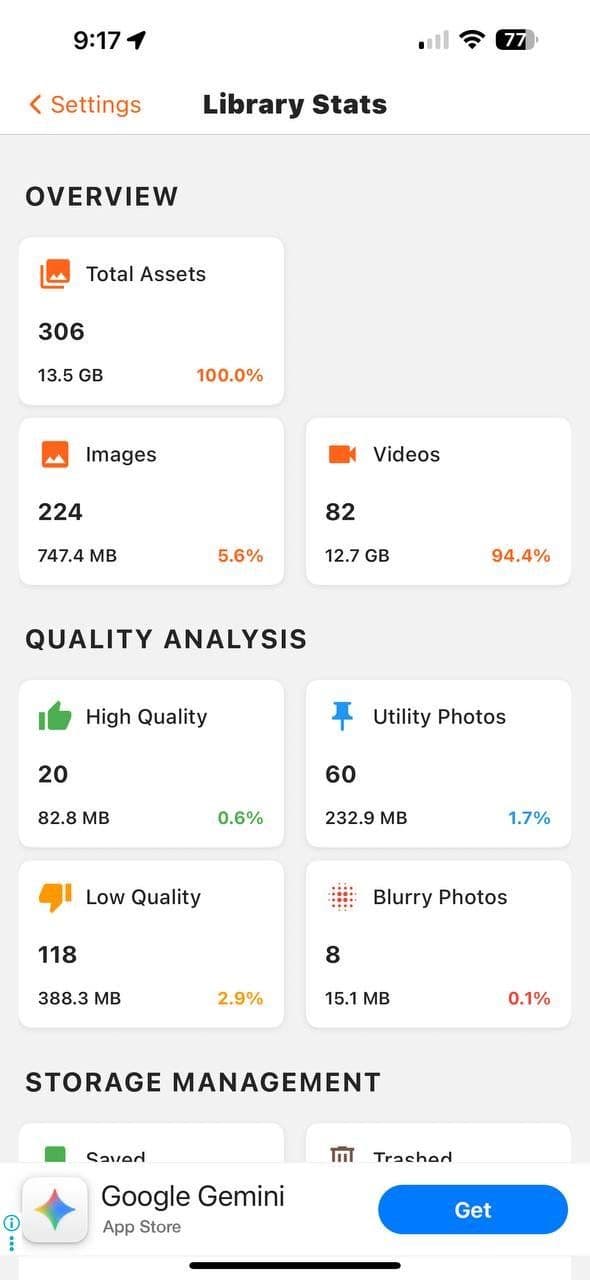
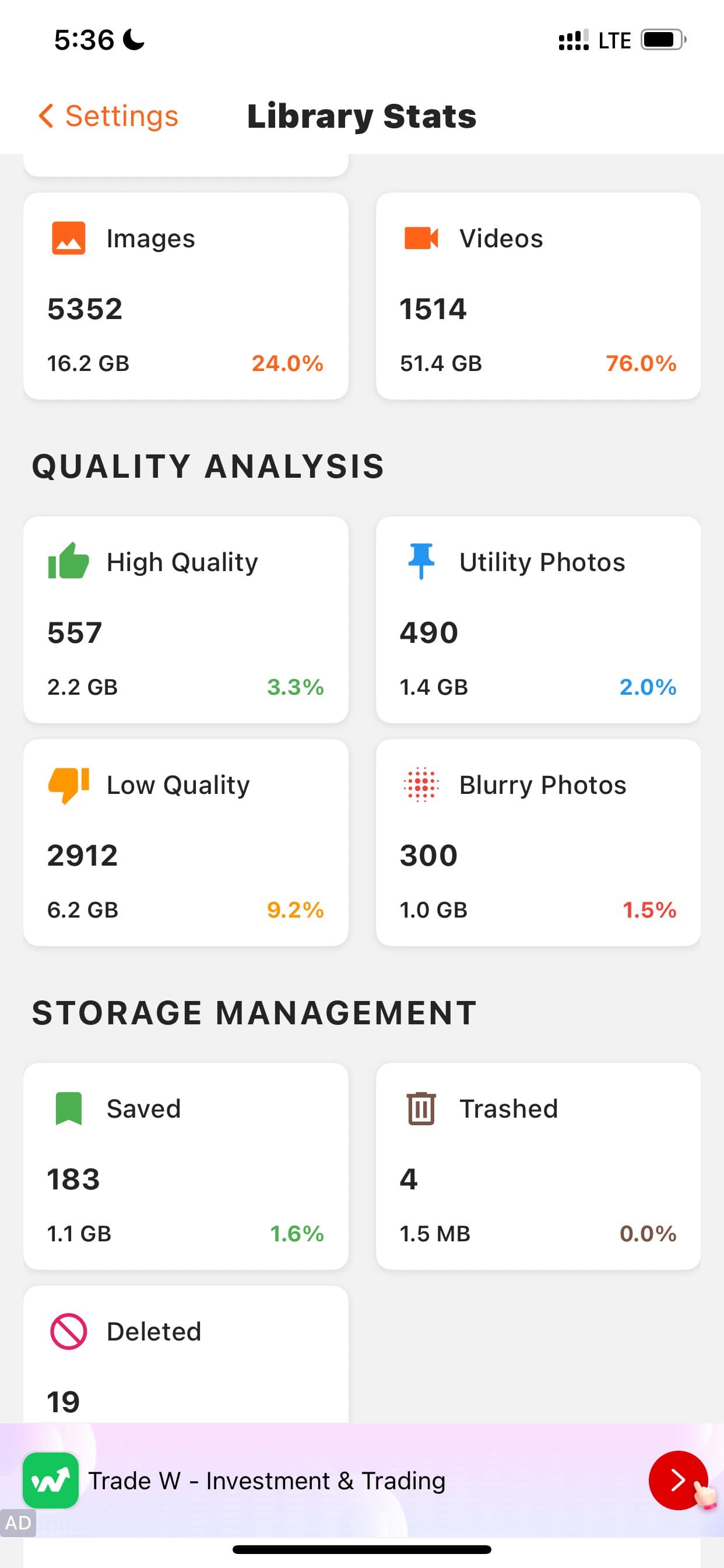
Another user had 6,866 photos and videos, 2,912 were flagged low-quality.
That's 42% of their entire image library.
Suprisingly one of the user deleted 583 photos in one sitting, 260.5 MB cleared under 40 minutes 🤯
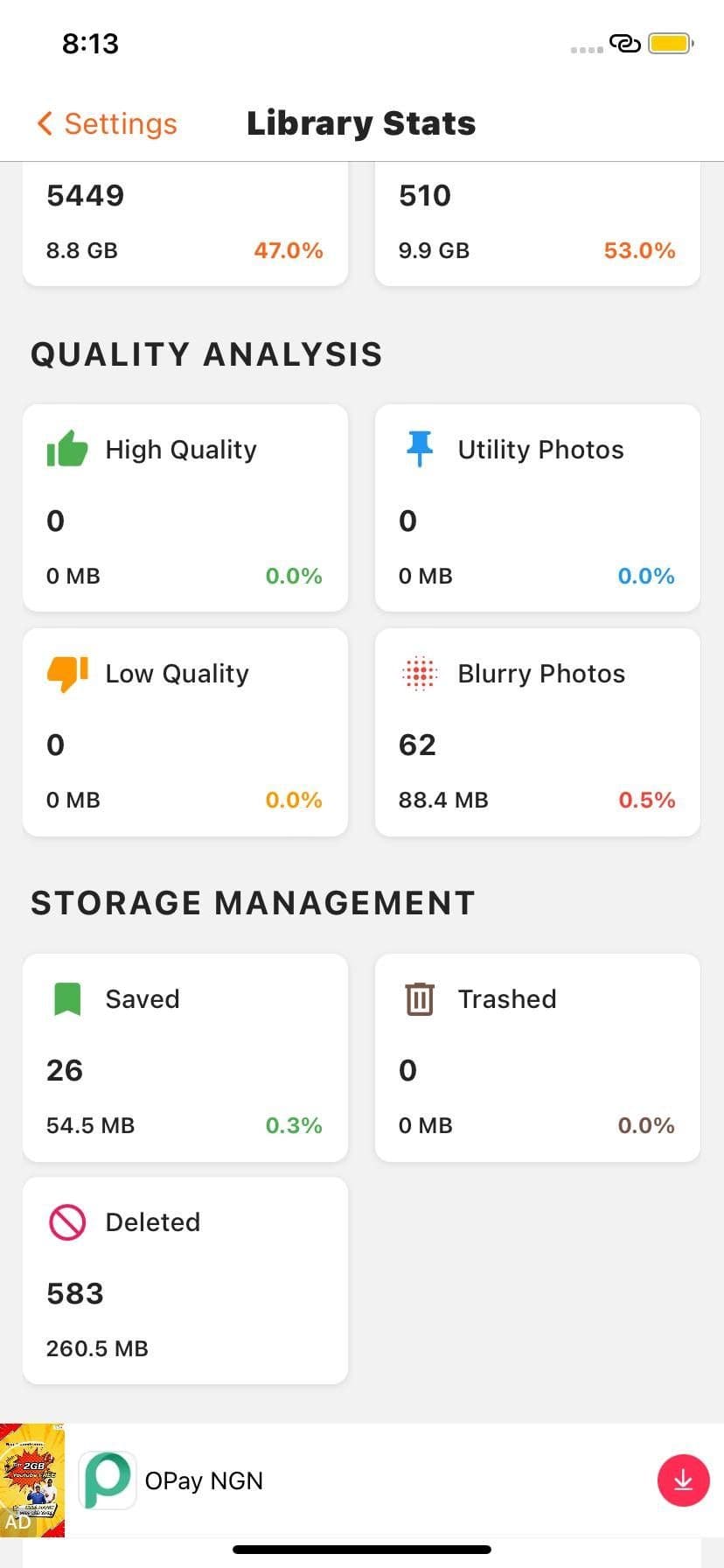
This is the part any agency can't fake. Real camera rolls, real mess and deletions on camera.
Number that matters 👇
50 rewarded sessions, $1,000 distributed and fully paid out.
$20 per rewarded session, $6.37 per submission, counting the 157 that didn't get paid but still used the app and sent proof.
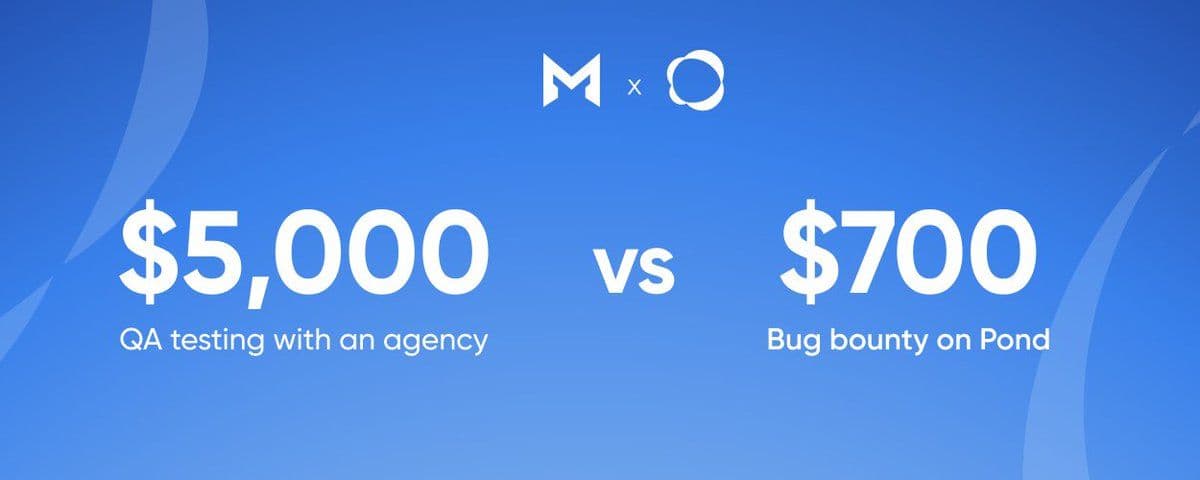
Now compare that to $75-99 on UserTesting, $150-200 for a recruited interview, $200-300 through an agency. 50 sessions at agency rates lands between $5,000 to $15,000. We later compared seven UserTesting alternatives on the prices they publish.
PhotoBase paid $1,000 on Pond. Screen recordings were included by default. Most agencies bill that as an add-on $$.
Why the data held up 📊
Panel research has a built-in flaw: participants get paid whether they engage or not, so they rush, click through and give you nothing usable.
This bounty tied payment to proof with real users screen recording, stats screenshot and written answers. There was no shortcut through it!
PhotoBase didn't only collect opinions about the app, they collected documented behavior inside it.
Side effect nobody prices in
2,300 registrations for $1,000 is a distribution number, not just a research number.
157 people submitted without getting paid and still cleaned their camera roll, still spent time in the app, still know PhotoBase exists.
The research budget did double duty as an acquisition channel.
How user testing bounty works?
One bounty posted. Pond handled registration, submission tracking, proof verification, and payouts straight to Pond Wallets.
Startups got real feedback, QA, and execution from a network of 10,000+ contributors, without the agency price tag or the 4-week wait.
PhotoBase is just one bounty example. This model works for any founder who needs to know if real people can actually use their product.
You can run this exact setup for your own product right now 👇
- Post a bounty on Pond
- Set the reward, the task, and the proof you need (screen recording, screenshot, written feedback, whatever fits)
- Contributors apply, complete the task, submit proof, and get paid automatically
Without any recruiting agency, manual chasing and 4-weeks wait.
Read the original PhotoBase case study on X.
 44.6K
44.6K 30
30